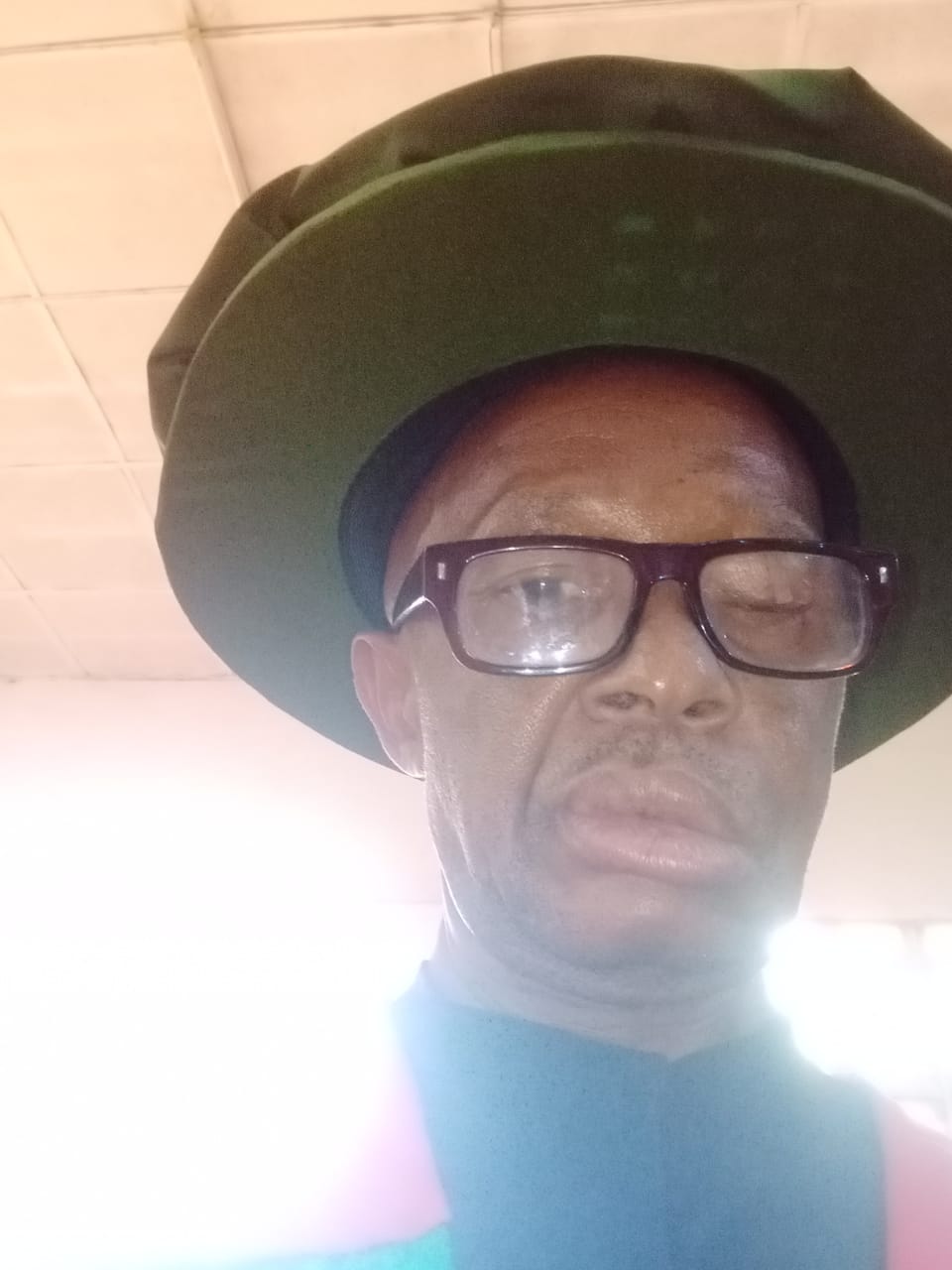
Dr John Afamefuna Emenike
Senior Lecturer
emenikejohn@fuek.edu.ng
+234 8063583504
Faculty of Specialized Education
Academic Information
Faculty of Specialized Education
Early Childhood Care and Education
B. Phil, B. STh, PGDE, M.ED, Ph.D, Professional Dips
Academics
Specialization & Research
Interest, Classroom Environment, Academic Achievement/Performance
Professional Biography
STATEMENT OF A TEACHING PORTFOLIO
My Philosophy of Education
Dr. Emenike, John Afamefuna
This statement of a teaching portfolio conveys my teaching aptitude, philosophy, style and motivating principles which have extensively influenced and guided my quest for knowledge and my carrier as a teacher. It provides concrete proof, although not limited to it, the content and focus of my knowledge and teaching outcomes, exposing the main and the underlying forces that has formed, continues to develop, direct and guide my philosophy of teaching or simply, my philosophy of education.
As a child I enjoyed going to school. After the first days in school, it dawned on me, clouded as it were, that this is ‘my thing’. As my colleagues loiter around their family homes and on the school way (as children we walked up to three kilometers to school and back), a clear indication of their disinterestedness and disenchantment with schooling, I went through my morning house domestic chores as fast as possible and found my way to school even before many other pupils. These early attendances to school later merited for me the school regulator, the class prefect and eventually the school prefect. All of these were not without the support of my father who though not educated but loved education with passion and always wished to have a child who has his head on his shoulders’ from a known disciplinarian and moral instructor. And so this marked the foundation of the journey to my teaching ambition and zeal.
The school offered along its many promises and expectations, lots of challenges and many difficulties that are unavoidable. At the primary school level, there was actually no school in the proper sense of the term, as lessons were held under the tree notwithstanding the weather condition (raining, sun shining or harmattan). The tree became as such our classrooms where we sat on the grass and took lessons with the little chalkboard as the only teaching aid available. This meant that we have regularly to wipe our chalkboard now and then during the lesson or in preparation for the next lesson. It was thus impossible to do revision as the lessons could not be recalled. Normally a particular teacher was in charge of a class and took them in all subjects. His or her area of specialization and professionalism was not so much considered. Qualitative and quantitative resources, instructional materials and other teaching aids were in most cases nonexistent. The fact that a particular teacher was entirely responsible for a class also meant that a pupil who is not particularly loved by the teacher risked the possibility of maximizing his or her potentials. As pupils, we were at the mercy of our teachers who now and again would cancel classes at will and send us to work in their farms and provide for their domestic needs. Our potentialities were highly underutilized or even almost untapped. Our opportunities were less than bright. Our challenges grew by the day but not directed to the building and strengthening of our future.
The school was thus a place of struggle with its joys and sorrows, fears and anxieties, risks and challenges, ups and downs, tears and laughter. The place which once gave me joy and fulfillment gradually began to give way to deeper reflection and to be reevaluated in the context of the prevailing circumstances. The revolving and reoccurring questions vibrating in my mind are: Is this an ideal that I would want to spend the rest of my life for?; what future does an education system like this hold for a nation and its young people?; are these challenges unsurmountable?; are changes possible?; under what circumstances could changes be possible?; who are or what can be the agent of such change? and others. It became clear to me that something is wrong, that something should be done, and should be done quickly.
My secondary level of education was another level of exposure full of excitement and fun. All of us were living in a boarding house. Our daily routine starts early in the morning around 5. 15 am with a bell rang to wake us up and other activities ranging from wash up , prayers, morning functions, classes, siesta, studies, games and others. Every minute was occupied with one activity or the other. Many of our teachers were fresh grandaunts from the same school who were retained based on their brilliant performance. Though they were not experienced but we enjoyed their teaching ineptitude as the zeal and anxiety to perform well beclouded their inexperience.
With the completion of my undergraduate studies, I immediately enrolled for my Post Graduate Diploma in Education (PGDE) and Master’s degree programme at the reputable University of Nigeria, Nsukka (UNN) at the faculty of Education. At UNN I came for the first time, hand in hand with an education platform that provided selected performance indicators used to measure productive learning, I became aware of the following:
That in most schools or classrooms, little or no teaching takes place.
No education system can rise above the quality of its teachers.
That students who have not been taught must find a way to make up for the lack.
The quality of knowledge provided in most schools is faulty, weak, lop-sided and not sufficient to equip the students for the world of work in the contemporary global competitive world.
In addition to the above it became clear to me, especially with reference to the type of school I attended in the past that:
o The educational system operated in most countries, while having helped to solve or relieve existing problems, has in more cases, exacerbated them and actually created more problems.
o Quality was sacrificed on the altar of quantity.
o The training of both teachers and students is inadequate in many respects, especially as there appears to be more pedagogical than subject area content.
o Learning was teacher centered and not learner’s oriented
My Masters studies focused on the appropriateness of the school environment for teaching and learning. The research conducted along these lines opened me to other horizons and new perspectives bordering on our economic questions but not limited to it. In ways more than one, it became my conviction that:
• There must be serious effort to maintain quality and standards in the education program. A situation where the academic and the professional competence as well as the integrity of the system are in serious doubt should be guided against.
• The maintenance of standards has to be approached through provision of appropriate school environment, curriculum innovation and improvement, quality staffing, staff development, quality and adequate instructional resources and facilities, effective administration and supervision of teaching.
• The environment (Learning System) under which the teacher and the student work must be improved so that both teacher and students psyche, self- image and public image can be enhance.
• Appropriate and adequate school environment should be enhanced so as to create conducive atmosphere for teaching and development of students.
My PhD programme focused on Interest, classroom environment and academic achievement. The study established the relationship between the three variables. The study revealed that there is a relationship among the variables. Discovering the interest of pupils at early stage is important to assist the pupil to either enhance or put more efforts to improve on weak areas. It became expedient that:
Academic achievement is a major determinant of the quality and quantity of the education programme
Pupils’ cardinal traits determine the direction of the interest of the pupils that can be used to assist pupils either for earlier intervention or for enhancement.
The classroom is where teaching and learning take place and must be adequate for maximal outcomes.
Classroom physical environment that include the structure, size, exit and entrance, airflow, furniture, seating arrangement, instructional materials, teaching aids, adornment are necessary for effective teaching and learning.
Classroom Social environment that include teacher’s support, interaction between teachers and pupils, pupils and pupils, pupils and materials ought to take place under mutual respect.
All of these call for change in learning, in cognition, in effective instructional strategies, in the role of technology, in teaching and learning and in a mismatch between the excitement generated by informal learning, and the reutilization of learning that are so common to many of our institutions of formal education. Gradually, it became clear to me that we need a new system of learning which emphasize learning with understanding. In this context, students would be said to have understood, only when:
• They can translate the classroom theories to real practical life experiences;
• They have learnt to use powerful ideas to make school, work, connected and meaningful
• Are able to transfer our learning thoughtfully and effectively to novel situations and problems leading to productive learning.
This framework highlights three general areas of knowledge, skills and dispositions that are important for any teacher to acquire.
i. Knowledge of learners and how the learner develops within social contexts;
ii. Conception of curriculum content and goals through an understanding of the subject matter and skills to be taught in the light of the social purposes of education and
iii. An understanding of teaching in light of content and characteristics of learners to be taught, as informed by assessment and supported by classroom environment.
After my post graduate Diploma studies, I undertook master’s studies in childhood education This opened to me the many challenges facing developing countries including but not limited to literacy and educational formation. I learnt how important it is to focus on indigenous skills that would drive the economy from the grass root to eventual development that are not alien to our originality as Africans. I also learnt that while it is important to maintain one’s culture and traditions, it is equally important to be exposed to innovative ways of thinking and seeing. My studies and research provided the opportunity to teach at the renowned Institute of Ecumenical Education and at other schools around. With my PhD programme, I had opportunity to study and interact with reputable lecturers and world class professors who provided me the needed support. I was exposed to learning how to dealing effectively with more challenging work or persisting problems, finding, integrating and synthesizing information, creating new solutions and working cooperatively with others for better outcomes. Systematically I learnt:
The role of pupils’ cardinal traits on their achievements;
What should be taught, why it is important, and how this knowledge should be organized (knowledge centeredness);
Who learns, how, and why (learner centeredness);
What kind of classroom, school and school community environments that promote learning (community centeredness);
The conducive environment for teaching and learning (appropriate environment); and
What kind of evidence for students, teachers and parents learning can be used to see if effective learning is taking place (assessment centered).
In keeping to my first love for teaching, I shall uphold the following rights of students in the classroom:
• A student shall have the right to fair and equal treatment.
• A student shall have the right to be safe in the classroom.
• A student shall have the right to hear and be heard in the classroom.
• A student shall have the right to be respected.
• A student shall have the right to learn what it means to be responsible and successful student.
• A student shall have the right to good and sound teaching that would develop his/her innate potentials.
The following principles shall guide my teaching:
o I shall align my teaching at all levels to the 21st century skills, namely adaptability, complex communication, social skills, non-routine problem solving skills, self- management/self-development and system thinking.
o I shall integrate ICT to teaching, learning, research and functional activities.
o I shall incentivize and respect the profession through policies and actions starting with the way I treat all parties involved namely: teachers, parents, administrators and students.
o I shall encourage learner-centered schools and classrooms.
o I shall encourage appropriate school environment.
o I shall develop collaboration with local and international centers of excellence in teaching and learning, institutions, foundations, partners and private organization.
o I shall follow professional practices consistent with school and system policies in working with students, parents and other colleagues.
o I shall demonstrate communication and interpersonal skills as they relate to interaction with students, teachers and parents.
o I shall demonstrate timeliness and attendance to assigned responsibilities.
o I shall demonstrate professional practices in teaching.
o I shall demonstrate accurate and up to date knowledge of content.
o I shall implement designed curriculum and maintain lesson plan as required by school policy.
o I shall participate in professional development opportunities and apply the concepts to classroom and school activities.
o I shall create a positive and disciplined learning environment in the classroom, in co-curricular activities and in interacting informally with students. In this way, each student is challenged to grow in knowledge and maturity, according to the students’ potentials in all respects of life.
o I shall maintain a positive and effective learning environment through, well prepared and varied lessons, which revolves around:
- student abilities and interests;
- setting of realistic and challenging, academic standards of student performance;
- forming a challenging and realistic program for students’ assignments;
- prompt and comprehensive attention to student work;
- demonstrating knowledge, competence and confidence in the relevant discipline and
- demonstrating high levels of professionalism in all activities.
The basis of my philosophy of education is founded on what education means for me. Generally, education is about learning, schooling and everything related to it. It is determined by the outcomes which include: Knowledge (K), Skills (S) and Attitude (A) (KSA). Acquisition of KSA is my resolve for every student, achievable through transformative teaching, appropriate environment: (physical, social, psychological and spiritual environments) harnessed through joint cooperation and collaboration of all factors to ensure KSA are acquired.
My Philosophy of Education
Dr. Emenike, John Afamefuna
This statement of a teaching portfolio conveys my teaching aptitude, philosophy, style and motivating principles which have extensively influenced and guided my quest for knowledge and my carrier as a teacher. It provides concrete proof, although not limited to it, the content and focus of my knowledge and teaching outcomes, exposing the main and the underlying forces that has formed, continues to develop, direct and guide my philosophy of teaching or simply, my philosophy of education.
As a child I enjoyed going to school. After the first days in school, it dawned on me, clouded as it were, that this is ‘my thing’. As my colleagues loiter around their family homes and on the school way (as children we walked up to three kilometers to school and back), a clear indication of their disinterestedness and disenchantment with schooling, I went through my morning house domestic chores as fast as possible and found my way to school even before many other pupils. These early attendances to school later merited for me the school regulator, the class prefect and eventually the school prefect. All of these were not without the support of my father who though not educated but loved education with passion and always wished to have a child who has his head on his shoulders’ from a known disciplinarian and moral instructor. And so this marked the foundation of the journey to my teaching ambition and zeal.
The school offered along its many promises and expectations, lots of challenges and many difficulties that are unavoidable. At the primary school level, there was actually no school in the proper sense of the term, as lessons were held under the tree notwithstanding the weather condition (raining, sun shining or harmattan). The tree became as such our classrooms where we sat on the grass and took lessons with the little chalkboard as the only teaching aid available. This meant that we have regularly to wipe our chalkboard now and then during the lesson or in preparation for the next lesson. It was thus impossible to do revision as the lessons could not be recalled. Normally a particular teacher was in charge of a class and took them in all subjects. His or her area of specialization and professionalism was not so much considered. Qualitative and quantitative resources, instructional materials and other teaching aids were in most cases nonexistent. The fact that a particular teacher was entirely responsible for a class also meant that a pupil who is not particularly loved by the teacher risked the possibility of maximizing his or her potentials. As pupils, we were at the mercy of our teachers who now and again would cancel classes at will and send us to work in their farms and provide for their domestic needs. Our potentialities were highly underutilized or even almost untapped. Our opportunities were less than bright. Our challenges grew by the day but not directed to the building and strengthening of our future.
The school was thus a place of struggle with its joys and sorrows, fears and anxieties, risks and challenges, ups and downs, tears and laughter. The place which once gave me joy and fulfillment gradually began to give way to deeper reflection and to be reevaluated in the context of the prevailing circumstances. The revolving and reoccurring questions vibrating in my mind are: Is this an ideal that I would want to spend the rest of my life for?; what future does an education system like this hold for a nation and its young people?; are these challenges unsurmountable?; are changes possible?; under what circumstances could changes be possible?; who are or what can be the agent of such change? and others. It became clear to me that something is wrong, that something should be done, and should be done quickly.
My secondary level of education was another level of exposure full of excitement and fun. All of us were living in a boarding house. Our daily routine starts early in the morning around 5. 15 am with a bell rang to wake us up and other activities ranging from wash up , prayers, morning functions, classes, siesta, studies, games and others. Every minute was occupied with one activity or the other. Many of our teachers were fresh grandaunts from the same school who were retained based on their brilliant performance. Though they were not experienced but we enjoyed their teaching ineptitude as the zeal and anxiety to perform well beclouded their inexperience.
With the completion of my undergraduate studies, I immediately enrolled for my Post Graduate Diploma in Education (PGDE) and Master’s degree programme at the reputable University of Nigeria, Nsukka (UNN) at the faculty of Education. At UNN I came for the first time, hand in hand with an education platform that provided selected performance indicators used to measure productive learning, I became aware of the following:
That in most schools or classrooms, little or no teaching takes place.
No education system can rise above the quality of its teachers.
That students who have not been taught must find a way to make up for the lack.
The quality of knowledge provided in most schools is faulty, weak, lop-sided and not sufficient to equip the students for the world of work in the contemporary global competitive world.
In addition to the above it became clear to me, especially with reference to the type of school I attended in the past that:
o The educational system operated in most countries, while having helped to solve or relieve existing problems, has in more cases, exacerbated them and actually created more problems.
o Quality was sacrificed on the altar of quantity.
o The training of both teachers and students is inadequate in many respects, especially as there appears to be more pedagogical than subject area content.
o Learning was teacher centered and not learner’s oriented
My Masters studies focused on the appropriateness of the school environment for teaching and learning. The research conducted along these lines opened me to other horizons and new perspectives bordering on our economic questions but not limited to it. In ways more than one, it became my conviction that:
• There must be serious effort to maintain quality and standards in the education program. A situation where the academic and the professional competence as well as the integrity of the system are in serious doubt should be guided against.
• The maintenance of standards has to be approached through provision of appropriate school environment, curriculum innovation and improvement, quality staffing, staff development, quality and adequate instructional resources and facilities, effective administration and supervision of teaching.
• The environment (Learning System) under which the teacher and the student work must be improved so that both teacher and students psyche, self- image and public image can be enhance.
• Appropriate and adequate school environment should be enhanced so as to create conducive atmosphere for teaching and development of students.
My PhD programme focused on Interest, classroom environment and academic achievement. The study established the relationship between the three variables. The study revealed that there is a relationship among the variables. Discovering the interest of pupils at early stage is important to assist the pupil to either enhance or put more efforts to improve on weak areas. It became expedient that:
Academic achievement is a major determinant of the quality and quantity of the education programme
Pupils’ cardinal traits determine the direction of the interest of the pupils that can be used to assist pupils either for earlier intervention or for enhancement.
The classroom is where teaching and learning take place and must be adequate for maximal outcomes.
Classroom physical environment that include the structure, size, exit and entrance, airflow, furniture, seating arrangement, instructional materials, teaching aids, adornment are necessary for effective teaching and learning.
Classroom Social environment that include teacher’s support, interaction between teachers and pupils, pupils and pupils, pupils and materials ought to take place under mutual respect.
All of these call for change in learning, in cognition, in effective instructional strategies, in the role of technology, in teaching and learning and in a mismatch between the excitement generated by informal learning, and the reutilization of learning that are so common to many of our institutions of formal education. Gradually, it became clear to me that we need a new system of learning which emphasize learning with understanding. In this context, students would be said to have understood, only when:
• They can translate the classroom theories to real practical life experiences;
• They have learnt to use powerful ideas to make school, work, connected and meaningful
• Are able to transfer our learning thoughtfully and effectively to novel situations and problems leading to productive learning.
This framework highlights three general areas of knowledge, skills and dispositions that are important for any teacher to acquire.
i. Knowledge of learners and how the learner develops within social contexts;
ii. Conception of curriculum content and goals through an understanding of the subject matter and skills to be taught in the light of the social purposes of education and
iii. An understanding of teaching in light of content and characteristics of learners to be taught, as informed by assessment and supported by classroom environment.
After my post graduate Diploma studies, I undertook master’s studies in childhood education This opened to me the many challenges facing developing countries including but not limited to literacy and educational formation. I learnt how important it is to focus on indigenous skills that would drive the economy from the grass root to eventual development that are not alien to our originality as Africans. I also learnt that while it is important to maintain one’s culture and traditions, it is equally important to be exposed to innovative ways of thinking and seeing. My studies and research provided the opportunity to teach at the renowned Institute of Ecumenical Education and at other schools around. With my PhD programme, I had opportunity to study and interact with reputable lecturers and world class professors who provided me the needed support. I was exposed to learning how to dealing effectively with more challenging work or persisting problems, finding, integrating and synthesizing information, creating new solutions and working cooperatively with others for better outcomes. Systematically I learnt:
The role of pupils’ cardinal traits on their achievements;
What should be taught, why it is important, and how this knowledge should be organized (knowledge centeredness);
Who learns, how, and why (learner centeredness);
What kind of classroom, school and school community environments that promote learning (community centeredness);
The conducive environment for teaching and learning (appropriate environment); and
What kind of evidence for students, teachers and parents learning can be used to see if effective learning is taking place (assessment centered).
In keeping to my first love for teaching, I shall uphold the following rights of students in the classroom:
• A student shall have the right to fair and equal treatment.
• A student shall have the right to be safe in the classroom.
• A student shall have the right to hear and be heard in the classroom.
• A student shall have the right to be respected.
• A student shall have the right to learn what it means to be responsible and successful student.
• A student shall have the right to good and sound teaching that would develop his/her innate potentials.
The following principles shall guide my teaching:
o I shall align my teaching at all levels to the 21st century skills, namely adaptability, complex communication, social skills, non-routine problem solving skills, self- management/self-development and system thinking.
o I shall integrate ICT to teaching, learning, research and functional activities.
o I shall incentivize and respect the profession through policies and actions starting with the way I treat all parties involved namely: teachers, parents, administrators and students.
o I shall encourage learner-centered schools and classrooms.
o I shall encourage appropriate school environment.
o I shall develop collaboration with local and international centers of excellence in teaching and learning, institutions, foundations, partners and private organization.
o I shall follow professional practices consistent with school and system policies in working with students, parents and other colleagues.
o I shall demonstrate communication and interpersonal skills as they relate to interaction with students, teachers and parents.
o I shall demonstrate timeliness and attendance to assigned responsibilities.
o I shall demonstrate professional practices in teaching.
o I shall demonstrate accurate and up to date knowledge of content.
o I shall implement designed curriculum and maintain lesson plan as required by school policy.
o I shall participate in professional development opportunities and apply the concepts to classroom and school activities.
o I shall create a positive and disciplined learning environment in the classroom, in co-curricular activities and in interacting informally with students. In this way, each student is challenged to grow in knowledge and maturity, according to the students’ potentials in all respects of life.
o I shall maintain a positive and effective learning environment through, well prepared and varied lessons, which revolves around:
- student abilities and interests;
- setting of realistic and challenging, academic standards of student performance;
- forming a challenging and realistic program for students’ assignments;
- prompt and comprehensive attention to student work;
- demonstrating knowledge, competence and confidence in the relevant discipline and
- demonstrating high levels of professionalism in all activities.
The basis of my philosophy of education is founded on what education means for me. Generally, education is about learning, schooling and everything related to it. It is determined by the outcomes which include: Knowledge (K), Skills (S) and Attitude (A) (KSA). Acquisition of KSA is my resolve for every student, achievable through transformative teaching, appropriate environment: (physical, social, psychological and spiritual environments) harnessed through joint cooperation and collaboration of all factors to ensure KSA are acquired.